
A microwave with hood vent is a smart two-in-one kitchen appliance that combines cooking convenience with proper ventilation. Mounted above the stove, it reheats and cooks food while clearing away smoke, steam, and cooking odors at the same time. This eliminates the need for a separate exhaust fan, helping you save valuable kitchen space. It’s an ideal choice for small or busy kitchens where every inch counts.
What Is a Microwave with Hood Vent?
The microwave with vent is an over‑the‑range appliance that heats food and clears the air above the cooktop at the time. The microwave with hood vent mounts above the stove replacing a range hood while adding microwave functions such as reheating, defrosting and cooking. A built‑in exhaust fan pulls smoke, steam and grease away from the burners and most units also include a light to brighten the cooking surface below. This two‑in‑one design makes the microwave with hood vent a choice for kitchens that have limited cabinet or counter space. Next the microwave with hood vent has vents that work either ducted or ductless. This affects how well the microwave, with hood vent clears the air.
How Does an Over-the-Range Microwave Vent Work?
An over‑the‑range microwave vent pulls air through a built‑in fan. Pushes it out through a duct or filter. The fan sits at the base or back of the microwave above the cooktop. When the vent is turned on the vent draws in smoke, steam and grease while you cook. In a ducted system the air goes through a vent pipe. Exits outside the house. In a system the air passes through a charcoal filter that traps odors and grease before the air is returned to the kitchen. Most models have two to four fan speeds so the vent can match the airflow to the amount of smoke or steam you produce. The difference between ducted and ductless setups plays a role, in how well the vent clears the air.
Benefits of a Microwave with Built-In Ventilation
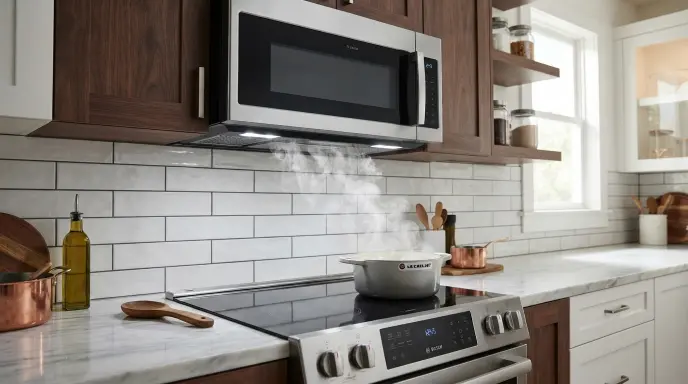
A microwave that has a built-in fan offers useful benefits compared to having a separate fan and a separate microwave. It takes up room in the kitchen because it is one machine that does two jobs. This is a choice for smaller kitchens or apartments where there is not much space inside the cabinets. It also helps you save money on installation because you only have to put one machine in place of two. In addition to saving space the fan in the microwave helps keep the air in your kitchen cleaner by taking smoke, steam and smells while you are cooking. Some of these machines also have features like cooking that senses when food is ready automatic defrost settings and different fan speeds.
Ducted vs. Ductless Venting: Which Is Right for You?
Choosing between ducted and ductless venting depends on kitchen layout. How much airflow you need. Ducted venting routes air through a vent pipe. Pushes it outside the house. Ducted venting removes smoke, steam and grease completely because nothing comes back into the kitchen. Ducted venting works best if the house already has ductwork or an exterior wall close enough for installation. Ductless venting filters air through a charcoal filter. Releases it back into the room. Ductless venting is easier and cheaper to install because it skips the ductwork completely but ductless venting needs filter changes to stay effective. If you cook often or fry food regularly ducted venting usually clears smoke and odors faster. For cooking or, in rental kitchens where ductwork is not an option ductless venting still gets the job done. Kitchen setup and cooking habits will point you toward the fit.
Space-Saving Advantages for Small Kitchens
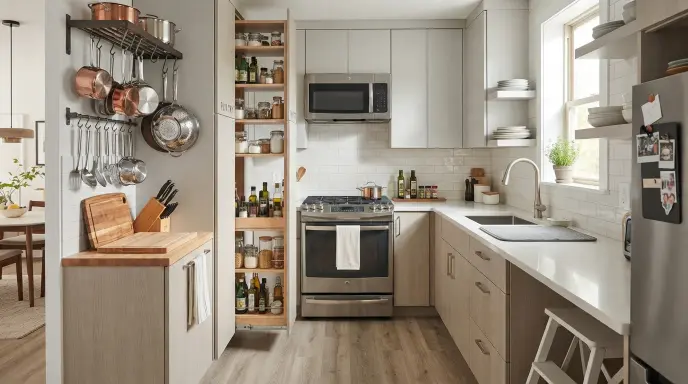
A microwave that has a hood vent gives benefits for saving space in kitchens. I think this microwave is useful because it takes the place of two things. A range hood and a microwave on the counter. With one device that is put above the stove. This helps free up space that would have been taken by a microwave giving more room to get ready for cooking or to put out pots and pans. It also helps with cabinet space because you don’t need a place to keep or show a microwave. For apartments or narrow kitchens where every bit of space matters this mix can make the room feel less crowded. Some models even have shelves or a cabinet style top, above the microwave. If your kitchen is small this microwave setup is one of the ways to reduce clutter while still having all the functions you need.
Top 5 Microwave with Hood Vent Comparison Table
| Rank | Model | Wattage | Vent Type | Fan Speeds | Best For |
|---|---|---|---|---|---|
| 1 | LG MVEF1337F | 1,000W | Ducted/Ductless | 4-speed | Best overall airflow |
| 2 | LG MVEL2033F | 1,000W | Ducted/Ductless | 4-speed | Quietest operation |
| 3 | KitchenAid Multifunction OTR | 950W / 1,400W (convection) | Ducted/Ductless | 3-speed | Best all-in-one (air fry + convection) |
| 4 | Samsung Smart OTR | 1,100W | Ducted | 550 CFM | Best for gas stoves |
| 5 | ZLINE OTR Convection | 900W | Ducted/Recirculating | 2-speed, 300 CFM | Best compact design |
Key Features to Look For Before Buying
A microwave that has a hood vent is really helpful for saving space in the kitchen. The microwave is useful because the important thing about a microwave is how fast and evenly it cooks. I suggest getting a microwave that has least 1,000 watts if you cook a lot. The fan speed and CFM rating determine how well the microwave removes smoke and steam and a higher CFM is better for gas stoves or when you cook a lot. Make sure the microwave can use ducted or ductless venting because this impacts both how it is installed and how it works over time. The inside size is also important especially if you heat up dishes or several containers at the time. Sensor cooking, the size of the microwave the noise level and the finish are all details that make daily use easier.
Installation Requirements and Tips
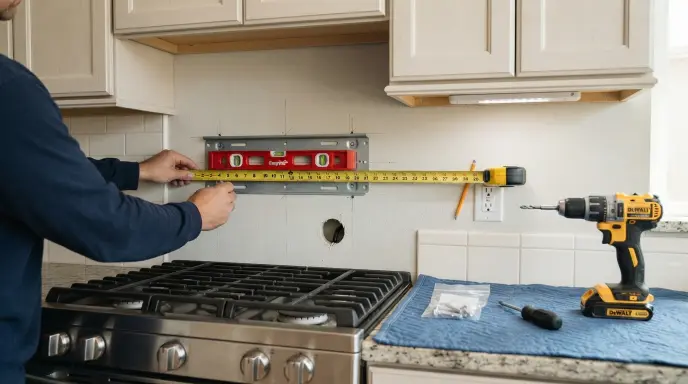
● The installation requirements and tips are just as important as choosing the model when you are setting up a microwave with a hood vent.
● Most microwaves with a hood vent need a 20‑amp circuit so before you buy check the wiring in your kitchen.
The space above your cooktop must have least 13 to 24 inches of clearance following the manufacturer’s minimum guidelines so that the microwave with a hood vent is safe and works well.
If you are installing a ducted system you also need access to a wall or existing ductwork to send the air outside.
● The installation of a system does not need that step.
You still need mounting brackets that can support the weight of the microwave between 60 and 100 pounds.
FAQs
Is a microwave with hood vent as powerful as a separate range hood?
Not quite. A microwave with hood vent handles light to moderate cooking well, but a dedicated range hood usually clears smoke and grease faster for heavy, daily cooking.
Can I install a microwave with hood vent myself?
It’s possible, but not recommended. These units are heavy, often need a dedicated electrical circuit, and may require ductwork. Hiring a licensed installer reduces the risk of wiring or ventilation issues.
How long does a microwave with hood vent typically last?
Most models last 7 to 10 years with regular maintenance. Budget units may show wear, like magnetron or control panel issues, closer to the 4 to 6 year mark.
What’s the difference between ducted and ductless models?
Ducted systems vent air outside through a duct, offering stronger smoke and odor removal. Ductless systems filter and recirculate air back into the kitchen, which is easier to install but needs regular filter changes.
Do I need to replace the filter often?
Yes. Grease filters should be cleaned every one to three months, and ductless charcoal filters typically need replacing every six months.
Best Overall, Best Budget, Best for Small Kitchens
Each of these models balances cooking power, ventilation strength, and price differently, so the best choice depends on what matters most for your space. Whichever option you choose, prioritizing wattage, fan speed, and vent type will help you find a unit that keeps your kitchen efficient for years to come.