
Buffet with Hutch: The Ultimate Guide to Choosing the Perfect Dining Storage Piece
A buffet with hutch is more than just a piece of furniture—it’s the centerpiece that can turn a simple dining room into a neat and attractive space. Essentially, a buffet with hutch combines two purposes in one: the storage found in the buffet’s cabinets, and the display area offered by the hutch on top. Because of this clever combination, a buffet with hutch has become a favorite choice for people who want to stay organized while still keeping their dining room looking good. Whether you’re showing off fine china, family heirlooms, or simply need extra storage, a buffet with hutch offers both style and function. In this guide, we’ll walk you through everything you need to know before choosing a buffet with hutch for your home.
Key Parts of a Buffet with Hutch
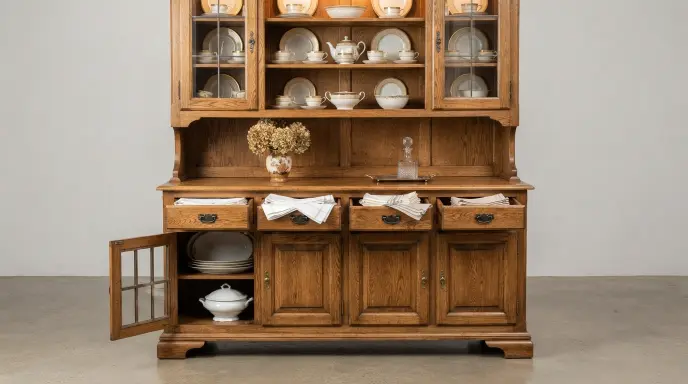
A buffet with hutch essentially brings two items together into one piece. First, the lower section, the buffet, sits at counter height and typically includes cabinets and drawers for storing linens, platters, and everyday dinnerware. On top, meanwhile, the hutch features shelves and often glass doors for displaying items, along with small drawers or slots for wine glasses or spices. In some cases, the two sections are permanently connected, while in others, they’re sold as separate pieces that can be stacked or arranged independently, which gives you more flexibility in how you use the space. Additionally, the hardware—knobs and hinges—usually matches the overall finish, such as brass for traditional designs or black iron for farmhouse styles. Overall, understanding these individual parts makes it easier to judge quality and choose the features that matter most for your needs.
How a Buffet with Hutch Differs from a Sideboard or China Cabinet
At first glance, a buffet with hutch, a sideboard, and a china cabinet might look similar, but each actually serves a different purpose. A sideboard, for instance, is simply the lower section on its own—low, wide, with doors and drawers but no upper unit—making it ideal for storage that doesn’t require added height. A china cabinet, on the other hand, is usually a single tall unit built mainly for display, often featuring glass doors and interior lighting to showcase china or collectibles. A buffet with hutch, by contrast, brings both elements together: closed storage underneath and display shelving on top. Ultimately, the best choice depends on how much storage versus display space you need, as well as whether you’d prefer one unified piece or the option to separate the hutch later.
Buffet with Hutch vs. Sideboard vs. China Cabinet: Quick Comparison
| Feature | Buffet with Hutch | Sideboard | China Cabinet |
|---|---|---|---|
| Structure | Two-piece (lower buffet + upper hutch) | Single low unit only | One tall, unified piece |
| Primary Use | Storage + display | Storage only | Display only |
| Height | Tall (combines both sections) | Low to counter height | Tall, floor to near-ceiling |
| Storage Space | Cabinets and drawers below | Cabinets and drawers | Minimal, mostly shelving |
| Display Space | Open or glass shelving on top | None | Glass doors, often with lighting |
| Flexibility | Can often be separated into two pieces | Fixed as one low piece | Fixed as one tall piece |
| Best For | Rooms needing both storage and display | Rooms wanting storage without added height | Showcasing china, crystal, or collectibles |
| Common Materials | Solid wood, engineered wood, glass, metal accents | Solid wood, engineered wood | Wood with glass panels, sometimes lighting |
Common Materials Used in Buffet Hutches
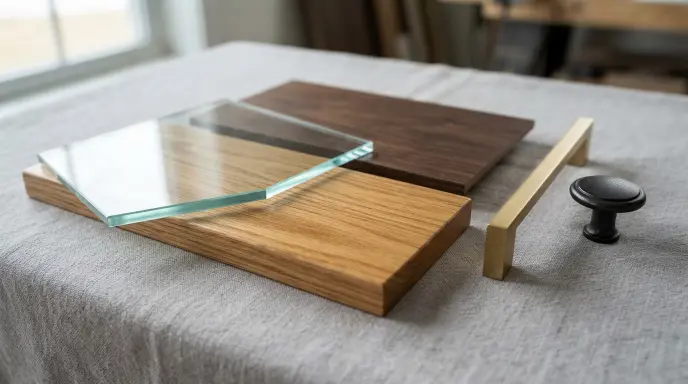
Buffet hutches are made from a range of materials, each offering a different balance of durability, weight, and price. Solid wood—such as oak, pine, mango, or mahogany—tends to be the most durable option and ages gracefully over time, though it’s also more expensive and heavier. Engineered wood, like MDF or plywood covered with veneer, costs less and resists warping, which makes it a practical choice for everyday use, even though it’s generally not as long-lasting as solid wood. In some cases, buffet hutches combine materials, pairing wood frames with metal legs or accents for a more modern look, while others use glass in the hutch doors so the display area stays visible without the added weight of solid wood. Ultimately, the material you choose determines not only the look of the piece but also how well it holds up over the years.
Popular Styles of Buffet with Hutch
Buffet with hutch pieces come in a variety of styles, each suited to a different room aesthetic. Traditional designs, for example, often feature carved details, raised-panel doors, and deep wood tones like cherry or mahogany, which work particularly well in formal dining rooms. Farmhouse styles, by comparison, lean toward a more rustic feel, with distressed finishes, clean lines, and a mix of open shelving and closed cabinets. Modern and transitional styles, on the other hand, favor simple lines, minimal hardware, and lighter wood or painted finishes that fit naturally into contemporary spaces. Meanwhile, rustic and industrial designs might incorporate reclaimed wood or metal accents for a more raw, textured look. In the end, choosing a style usually comes down to matching the piece with your existing furniture and the overall tone you want the room to have.
Benefits of Using a Buffet with Hutch
A buffet with hutch offers a practical mix of storage and style that’s hard to find in a single-purpose piece. To begin with, the lower cabinets and drawers provide room to keep table linens, serving dishes, and everyday dinnerware out of sight, which in turn frees up kitchen cabinet space for other items. At the same time, the upper hutch turns the piece into a display spot, letting you show off china, glassware, or decorative items without needing a separate cabinet. Because it combines two functions in one footprint, a buffet with hutch is often more space-efficient than buying a sideboard and a china cabinet separately, especially in smaller dining rooms. On top of that, it adds a visual anchor to the room, since the height and detail of the hutch tend to draw the eye more than a low, flat piece would.
Best Rooms and Spaces for a Buffet with Hutch
A buffet with hutch works well beyond just the dining room. In the dining room, it’s the most natural fit—sitting along a wall to hold serving pieces while displaying fine china within reach of the table. In an open-concept kitchen, it can double as pantry storage and a spot for everyday dishes or small appliances. Living rooms and entryways can use one too. The lower cabinets hold linens or media storage, while the hutch displays books, photos, or decorative items.
Standard Sizes and Dimensions to Know
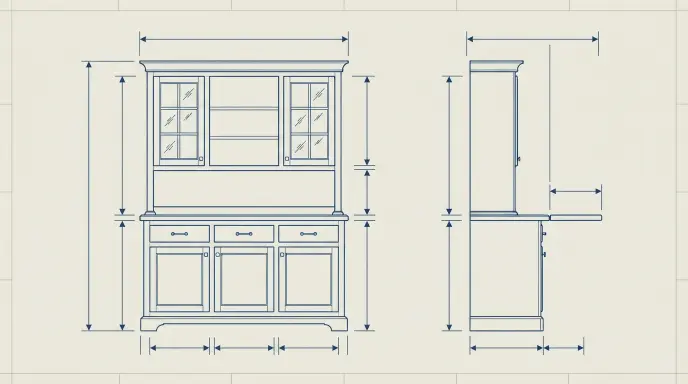
Buffet with hutch pieces come in various sizes. The buffet section typically runs 60 to 72 inches wide, 18 to 20 inches deep, and 30 to 36 inches tall—standard counter height. The hutch adds another 40 to 50 inches, so the combined piece can reach 75 to 85 inches tall. Check your ceiling height first, especially with crown molding. The hutch depth is usually 12 to 16 inches, slightly less than the buffet, so it doesn’t loom over the space. Smaller apartment-friendly versions exist too, sometimes as narrow as 40 to 48 inches wide.
Tips for Styling and Organizing a Buffet with Hutch
Styling a buffet with hutch works best when display and storage stay balanced. On the open shelves or behind glass doors, for example, group items in odd numbers—like three or five pieces—and vary the heights using stacked plates, vases, or framed photos to keep the display from looking flat. At the same time, leaving some breathing room between items usually looks better than filling every inch of shelf space. In the lower cabinets, meanwhile, drawer dividers or small bins help keep linens, napkins, and flatware from becoming a jumbled mess every time you open a drawer. It’s also worth rotating what’s on display every few months, swapping in seasonal items or different pieces from your collection, so the hutch doesn’t feel static.
FAQs
1. What is the difference between a buffet and a hutch? A buffet is the lower cabinet section used mainly for storage, while a hutch is the upper unit with shelves or glass doors used mainly for display. Together, they form a buffet with hutch.
2. Can a buffet and hutch be used separately? Yes, many buffet with hutch sets are sold as two separate pieces that can be stacked together or used apart, giving you more flexibility if your space or needs change.
3. Is a buffet with hutch the same as a china cabinet? Not quite. A china cabinet is usually one tall, unified piece built almost entirely for display, whereas a buffet with hutch combines closed storage below with display shelving above.
4. What should I store in a buffet with hutch? The lower buffet is good for table linens, serving platters, and everyday dinnerware, while the upper hutch works well for displaying china, glassware, or decorative items.
5. How much space do I need for a buffet with hutch? Most combined pieces range from 75 to 85 inches tall and 60 to 72 inches wide, so it’s a good idea to measure your wall space and ceiling height before buying.
6. What materials are best for a buffet with hutch? Solid wood offers the most durability but costs more, whereas engineered wood is more budget-friendly and resists warping. Some pieces mix wood with metal or glass accents.
7. Can a buffet with hutch fit in a small dining room? Yes, smaller apartment-friendly versions are available, sometimes as narrow as 40 to 48 inches wide, which work better in compact spaces.
Is a Buffet with Hutch Right for You?
A buffet with hutch is more than a storage piece. It is a statement of style, function and organization all together. Whether you are looking to show off your china make more counter space for hosting guests or just make your dining room less cluttered this flexible furniture piece meets every need. From fashioned wooden styles to modern and clean finishes there is a buffet with hutch that can fit almost any look in your home. Before you decide on your choice think about the size of your room how much storage you need and the general style of your house. With the one a buffet with hutch can be both a helpful and useful piece of furniture and a nice and beautiful centerpiece in your dining area, for many years.