
A kitchen backsplash is more than a surface that keeps your walls safe from water, grease and food splashes. It can also be one of the seen parts of the whole kitchen
. People who own homes often look for ideas for a kitchen backsplash because they want something more special and fun, than regular lines of simple tiles.
A unique backsplash can bring color, texture, shapes or natural things into the kitchen while making it feel cozier and more fashionable.
Whether you are changing the kitchen or just fixing one wall the right backsplash can make a big difference. From tiles made by hand and strong shapes to stone and surprising materials there are many ways to create a special look.
The best option depends on your kitchen style, your cabinets, your countertops, your budget and how work you want to do. With thinking a backsplash can turn a normal kitchen into a beautiful center of attention.
Meaning and Definition of a Unique Kitchen Backsplash
A kitchen backsplash is a wall covering put in place behind the stove, sink and countertop. It mainly helps keep the wall safe from water, food splashes, stains and grease.
Over time kitchen design has. Now the backsplash is also seen as a key part of decoration.
A unique kitchen backsplash is one that moves beyond repeated tile patterns. It can stand out because of the material it uses the color it has the shape it takes the texture it shows the pattern it forms how it’s installed or its overall look. Uniqueness doesn’t always mean something bold. Even common materials, like ceramic or glass can feel special when arranged in ways.
Background and Evolution of Kitchen Backsplash Design
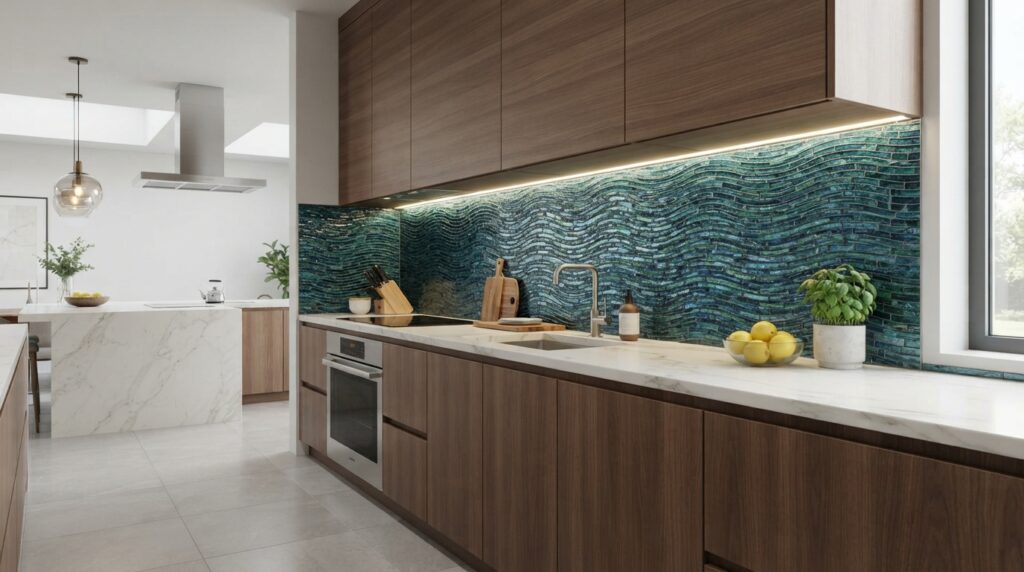
Backsplashes started out with a job to do. Kitchens needed places that could be cleaned quickly and could keep walls safe, from water, oil, smoke and bits of food. Basic ceramic tiles were a hit because they lasted a time could be washed easily and didn’t take much effort to look after.
As time passed the way kitchens were designed changed. People paid attention to how things looked. Homeowners began using backsplashes to show their style and add something nice to see. Of looking at the backsplash as just a small part of the kitchen designers started thinking of it as a big part of the whole kitchen look.
Creative Materials for a Distinctive Backsplash
To make the backsplash stand out one of the ways is to choose a material that is interesting. The material will instantly change the texture, color and overall character of the kitchen.
Handmade ceramic tiles are an excellent choice for homeowners who appreciate an artistic appearance. Their slight variations in shape and color can give the kitchen a warm, handcrafted feel.
Marble offers a sophisticated appearance with natural veining. A marble backsplash can work especially well with simple cabinetry because the natural patterns become a decorative feature.
Natural stone can bring an earthy and organic character to the kitchen. Depending on the type of stone, it can create anything from a rustic farmhouse appearance to a refined modern look.
Glass tiles can make a kitchen feel brighter because they reflect light. They are particularly useful in smaller kitchens where creating a sense of openness is important
Terrazzo is another interesting option. Its mixture of colors and stone-like pieces can introduce visual texture without relying on a complicated pattern.
Another option is to create a feature wall behind the stove. Using a distinctive pattern or material only in this area keeps the design interesting without making the entire kitchen feel overwhelming.
The key is balance. If the backsplash has a strong pattern, simpler cabinets and countertops can help maintain visual harmony.
Unique Kitchen Backsplash Ideas for Different Kitchen Styles
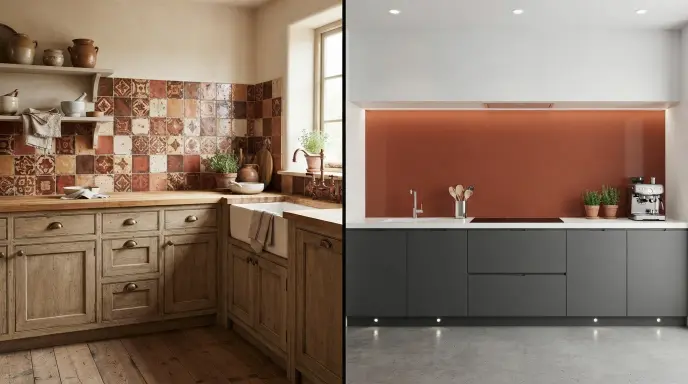
Different kitchen styles require backsplash ideas. A look that works great in a kitchen might not fit as well in a traditional or rustic area.
In a kitchen think about large tiles, simple shapes, flat surfaces or light colors. A straightforward backsplash can go well with cabinets and simple handles.
In a farmhouse kitchen, handmade ceramic tiles, colored subway tiles or real stone can bring a cozy feel and personality. Uneven materials can help create the easygoing farmhouse style.
In a kitchen, marble old-fashioned tile patterns or fancy edge details can add class without making the room feel too new.
In a kitchen, dark tiles surfaces that look like concrete tiles that look like bricks or metal parts can be a good choice. These materials can match hardware and darker fixtures.
In a kitchen soft blue, green, white or light brown shades can look nice. Glass or shiny tiles can also bounce light around. Give a clean feel.
The best design is not always the costly or the most eye-catching. It is the one that fits naturally with what’s already, in the kitchen.
How to Choose the Right Backsplash
Choosing the backsplash is about finding the right balance between style, function and money. Start by thinking about how your kitchen or bathroom looks. Is it up to date, fashioned or mixed style? Then choose a backsplash material and design that goes well with your cabinets, countertops and floors. Make sure the backsplash does not clash with them. Being practical is important too. Places that get splashes and dirt like behind a stove need easy to clean backsplashes such as tile, glass or stainless steel. In areas that’re more for showing off you can use softer finishes, like natural stone or handmade tile.. Feel matter a lot. Neutral colors create a background look. Strong designs or bright colors can become the feature. Finally think about how work the backsplash will require and how much it costs.
Backsplash Material Comparison Chart
| Material | Durability | Maintenance | Cost | Best For |
|---|---|---|---|---|
| Ceramic Tile | High | Easy | $ | Everyday kitchens |
| Porcelain Tile | Very High | Very Easy | $$ | Busy, wet areas |
| Glass Tile | Moderate | Easy | $$ | Modern, bright spaces |
| Natural Stone | Moderate | High | $$$ | Luxury, classic looks |
| Quartz/Granite Slab | Very High | Low | $$$$ | Seamless, upscale kitchens |
| Stainless Steel | High | Easy | $$$ | Behind the stove |
| Peel-and-Stick | Low | Easy | $ | Renters and quick updates |
Expert Advice Before You Buy
Before you make a decision it’s worth taking an expert-backed tips into account. These can help you save time and money over the term. Start by ordering sample tiles. Put them in the space where you plan to use them. Look at them under both light and artificial light because colors and finishes can look very different on a showroom wall than they do in your own kitchen.
Next buy 10 to 15 percent material than your measurements suggest. This gives you room for cuts, breakage and future repairs— important if you’re working with a pattern that might be discontinued later and hard to match.
If you’re unsure about grout lines ask your installer what grout color options are available. Darker grout hides stains better in high-use areas like kitchens and bathrooms. Lighter grout can make a space feel brighter and more open.
Finally don’t overlook installation costs and timelines. Intricate patterns, natural stone or large-format tiles often take time and require more skilled labor. Make sure to include these factors in your budget before getting too excited, about a design that might stretch beyond your means.
FAQs
1. What is the most popular backsplash material right now?
Subway tile remains one of the most popular choices due to its timeless look and affordability, though large-format porcelain and natural stone-look tiles are trending for a more modern, seamless appearance.
3. How much does it cost to install a backsplash?
Costs vary widely based on material and labor, typically ranging from $5 to $50+ per square foot installed. Basic ceramic tile is the most budget-friendly, while natural stone or custom designs sit at the higher end.
4. What is the easiest backsplash material to clean?
Porcelain, glass, and stainless steel are among the easiest to maintain since they resist stains and don’t require sealing. Natural stone needs more upkeep, including periodic sealing to prevent staining.
5. Should my backsplash match my countertop?
Not necessarily. While a matching backsplash and countertop create a seamless, upscale look, contrasting materials and colors can add visual interest and make either feature stand out as a focal point.
6. How do I choose a backsplash color?
Neutral tones (white, beige, gray) offer long-term versatility and are easier to update around, while bold colors or patterns work well if you want a statement piece or plan to change your look more frequently.
7. What’s the standard height for a kitchen backsplash?
Most kitchen backsplashes extend 18 inches from the countertop to the bottom of the upper cabinets, though full-height backsplashes (counter to ceiling) are increasingly popular for a modern look.
8. Can I put a backsplash directly over old tile or drywall?
In many cases, yes—backsplashes can often be installed over existing tile or drywall if the surface is clean, flat, and structurally sound, though a professional can confirm if your specific surface needs prep work first.